



Cannabinoid Receptor
Cannabinoid Receptor
Cannabinoid receptors are currently classified into three groups: central (CB1), peripheral (CB2) and GPR55, all of which are G-protein-coupled. CB1 receptors are primarily located at central and peripheral nerve terminals. CB2 receptors are predominantly expressed in non-neuronal tissues, particularly immune cells, where they modulate cytokine release and cell migration. Recent reports have suggested that CB2 receptors may also be expressed in the CNS. GPR55 receptors are non-CB1/CB2 receptors that exhibit affinity for endogenous, plant and synthetic cannabinoids. Endogenous ligands for cannabinoid receptors have been discovered, including anandamide and 2-arachidonylglycerol.
Cannabinoid Receptor Isoform Specific Products
All Product Categories
-
Cannabinoid Receptor Inhibitors
(37)
View all products
-
Cannabinoid Receptor Agonists
(141)
View all products
-
Cannabinoid Receptor Antagonists
(76)
View all products
-
Cannabinoid Receptor Activators
(14)
View all products
-
Cannabinoid Receptor Modulators
(24)
View all products
-
Cannabinoid Receptor Chemical
(1)
View all products
-
Cannabinoid Receptor Inducer
(1)
View all products
-
Cannabinoid Receptor Degrader
(1)
View all products
-
Cannabinoid Receptor Controls
(2)
View all products
-
Cannabinoid Receptor Ligands
(13)
View all products
-
Cannabinoid Receptor Related Products (448)
Related Products (448)

-
Antibodies (1)
-
Cannabinoid Receptor Isoform Comparison
-
Vicasinabin
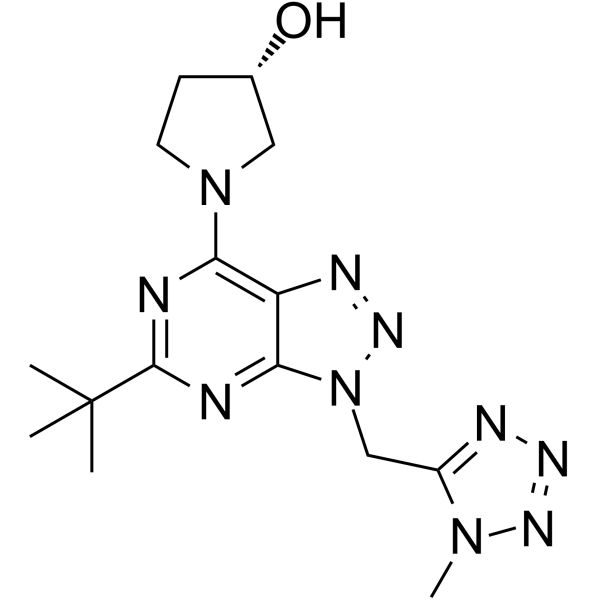 0 ImagesSynonyms: RG7774Vicasinabin (RG7774) is an orally active, selective, and full CB2R agonist, with EC50 values of 2.81 nM and 2.60 nM for human CB2R and mouse CB2R, respectively. Vicasinabin inhibits inflammation, reduces leukocyte adhesion and decreases vascular permeability by selectively activating CB2R. Vicasinabin can be used in the researches for diabetic retinopathy, uveitis and laser-induced choroidal neovascularization.
-
Rimonabant-d10
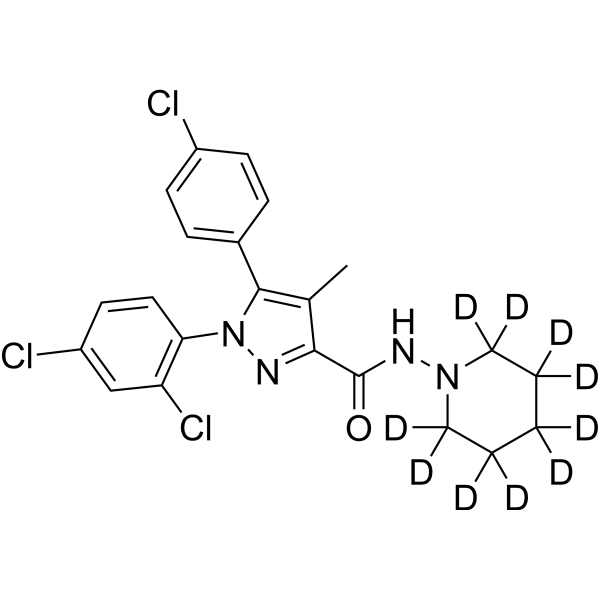 0 ImagesCat. No.: HY-14136SCAS No.: 929221-88-5Synonyms: SR141716-d10Rimonabant-d10 is deuterium labeled Rimonabant. Rimonabant (SR141716) is a highly potent, brain penetrated and selective central cannabinoid receptor (CB1) antagonist with a Ki of 1.8 nM. Rimonabant (SR141716) also inhibits Mycobacterial membrane protein Large 3 (MMPL3).
-
CB2R antagonist 3
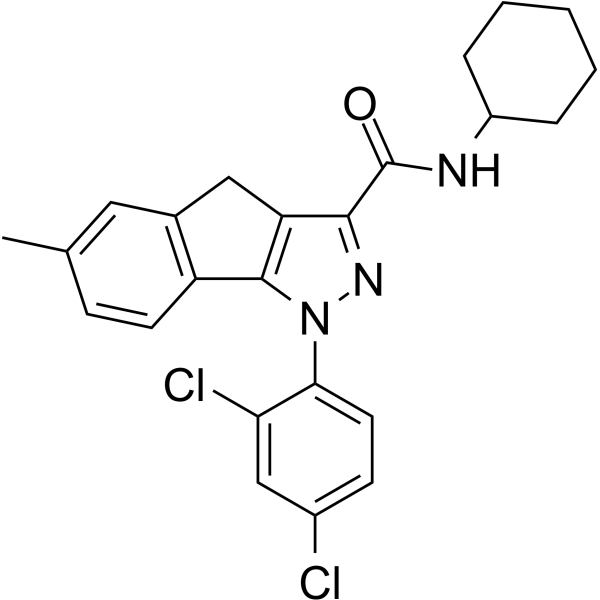
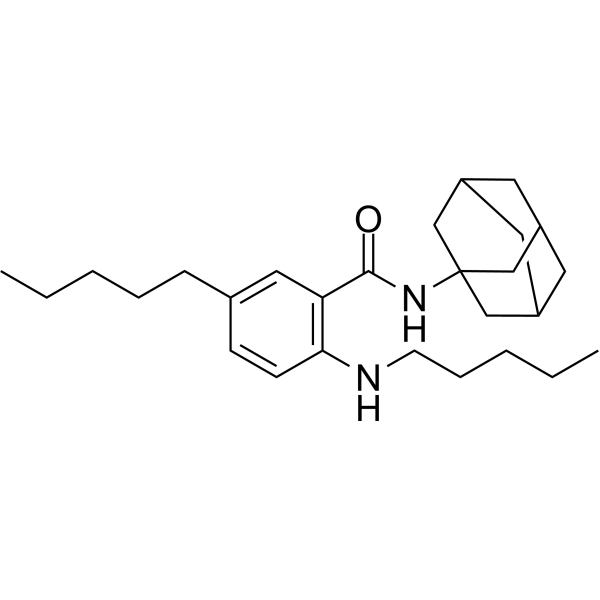 0 ImagesCat. No.: HY-152581Purity: 98.08%CB2R antagonist 3 is a selective antagonist of cannabinoid type 2 receptor (CB2R). CB2R antagonist 3 has high affinity for human CB2R and specific selectivity for CB1R. CB2R antagonist 3 can be combined with CB65 (HY-110047), the activator of CB2R. CB2R antagonist 3 effectively up-regulates the expression of anti-inflammatory cytokines and down-regulates the expression of pro-inflammatory cytokines.
-
(R)-Monlunabant
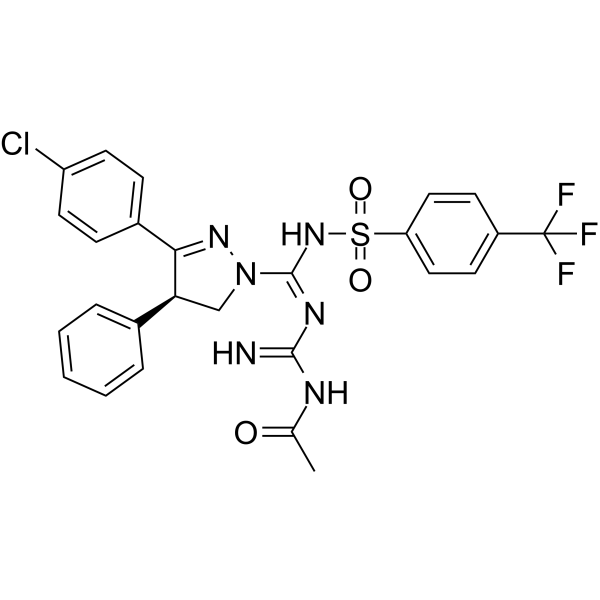 0 ImagesSynonyms: (R)-MRI-1891; (R)-INV-202(R)-Monlunabant ((R)-MRI-1891) is a CB1 receptor mediators for research of obesity and metabolic disease

-
(Rac)-Zevaquenabant
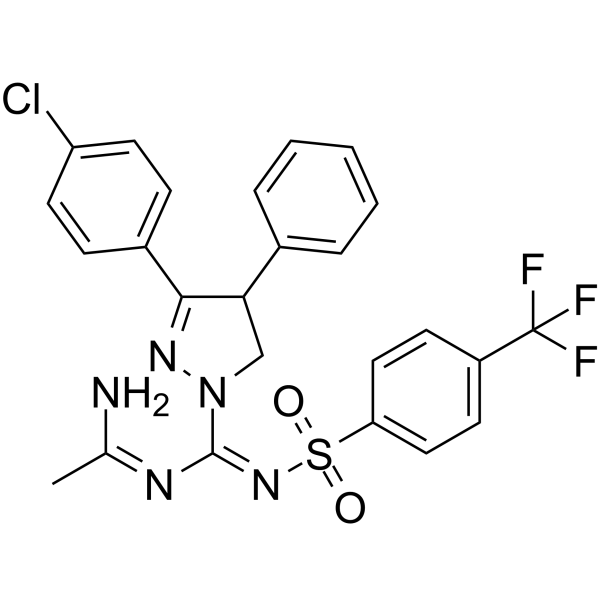 0 ImagesSynonyms: (Rac)-MRI-1867(Rac)-Zevaquenabant ((Rac)-MRI-1867, compound 6b) is a cannabinoid receptor type 1 (CB1R)/iNOS antagonist, with a Ki of 5.7 nM for CB1R. (Rac)-Zevaquenabant is potential for the research of liver fibrosis.
-
Docosatetraenylethanolamide
 0 ImagesSynonyms: DEADocosatetraenylethanolamide (DEA) is a cannabinoid receptor 1 (CB1) agonist. Docosatetraenylethanolamide inhibits the specific binding of cannabinoid probe to rat synaptosomal membranes with a Ki value of 34.4 nM. Docosatetraenylethanolamide can be used in the research of nervous system.
-
S-777469
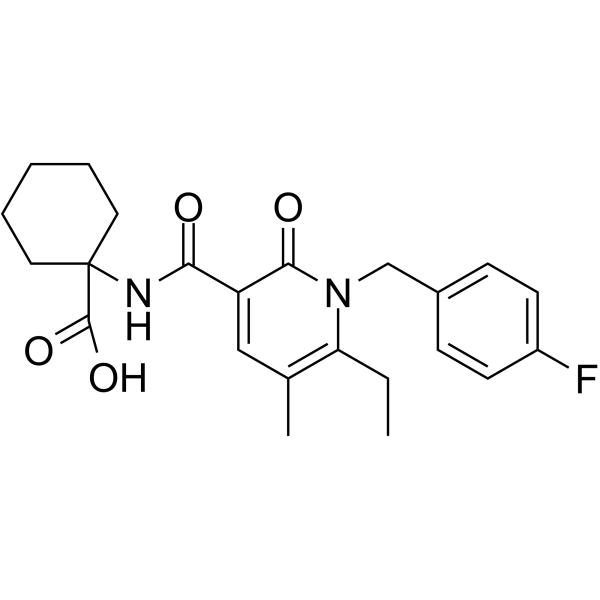 0 ImagesS-777469 is a selective and orally available cannabinoid type 2 receptor (CB2) agonist with a Ki of 36 nM. S-777469 significantly suppresses compound 48/80-induced scratching behavior in mice in a dose-dependent manner. S-777469 produces its antipruritic effects by inhibiting itch signal transmission through CB2 agonism.
-
GP1a
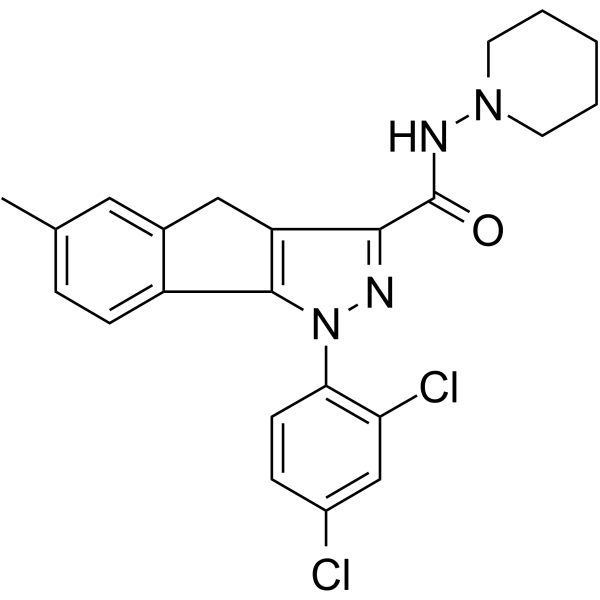 0 ImagesGP1a is a potent agonist of cannabinoid receptor 2 (CB2). Gp1a is beneficial to skin wound healing. GP1a inhibits inflammation and fibrogenesis while promoting re-epithelialization.
-
Surinabant
 0 ImagesSynonyms: SR 147778Surinabant (SR 147778) is an orally active, selective cannabinoid receptor type 1 CB1R antagonist. Surinabant is used in studies of obesity and alcoholism.
-
MJ15
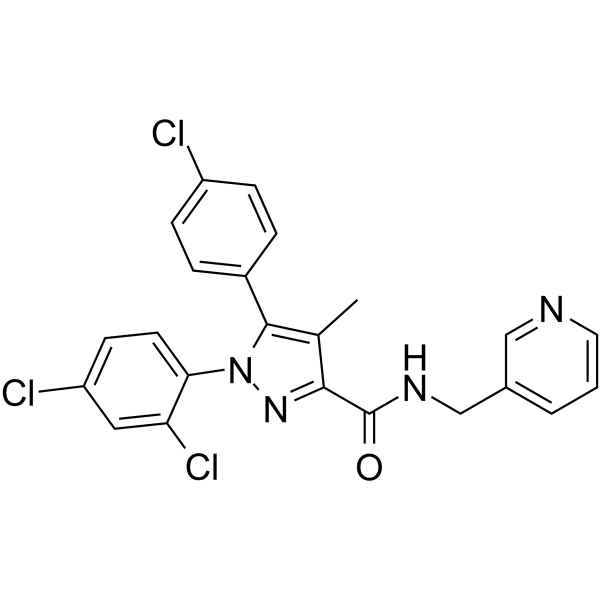 0 ImagesCat. No.: HY-103327CAS No.: 944154-76-1
-
β-Caryophyllene-d2
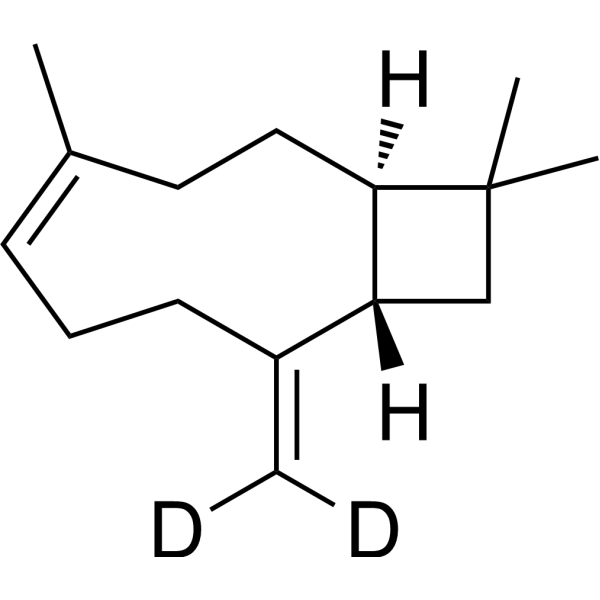 0 ImagesCat. No.: HY-N1415SCAS No.: 2006272-96-2β-Caryophyllene-d2 is deuterium labeled β-Caryophyllene. β-Caryophyllene is a CB2 receptor agonist.
-
Rosonabant
 0 ImagesRosonabant is a selective antagonist for cannabinoid receptor (CB1 receptor), which reduces body weight and improves improves the risk of obesity-related cardiovascular metabolic diseases. Rosonabant exhibits adverse side effect, such as nausea and mental disorder.
-
PSB-CB5
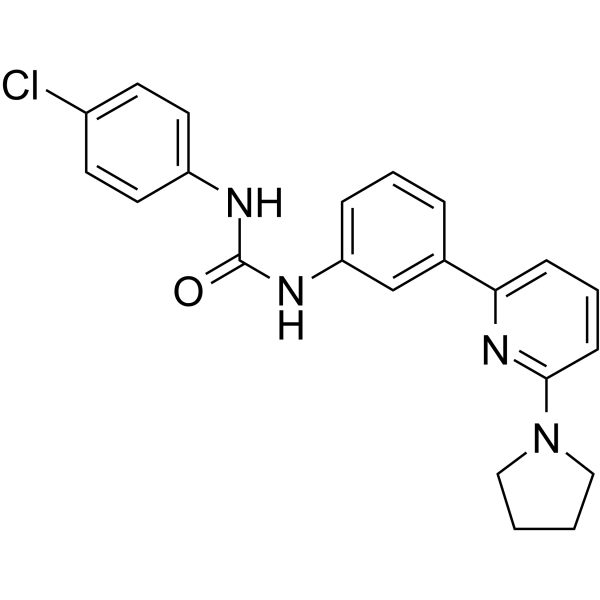
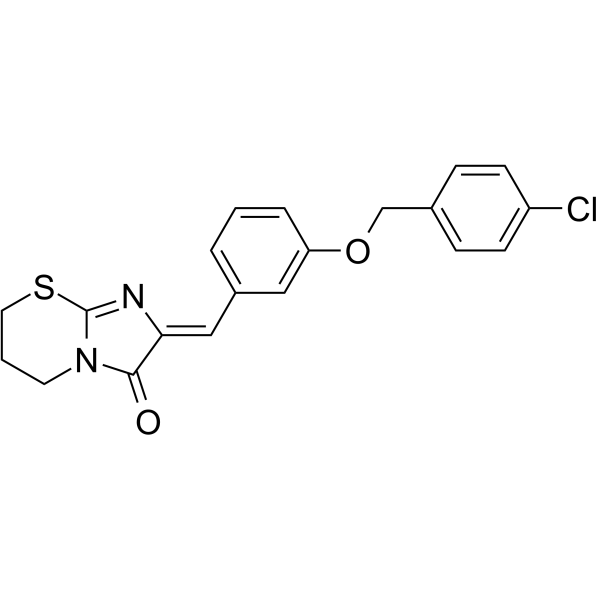 0 ImagesPSB-CB5 is a potent and selective antagonist of GRP18. PSB-CB5 has the potential for the research of metabolic disease and obesity.
-
Arachidonoyl-N,N-dimethyl amide
 0 ImagesSynonyms: Arachidonic acid-N,N-dimethyl amideAnandamide (AEA) is an endogenous cannabinoid that binds to both central cannabinoid (CB1) and peripheral cannabinoid (CB2) receptors. The biological actions of AEA are terminated by cellular uptake and hydrolysis of the amide bond by the enzyme fatty acid amide hydrolase. Arachidonoyl-N,N-dimethyl amide is an analog of anandamide that exhibits weak or no binding to the human central cannabinoid (CB1) receptor (Ki >1 μM). It inhibits rat glial gap junction cell-cell communication 100% at a concentration of 50 μM.
-
Eicosapentaenoyl ethanolamide-d4
 0 ImagesEicosapentaenoyl ethanolamide-d4 is the deuterium labeled Eicosapentaenoyl ethanolamide. Eicosapentaenoyl ethanolamide, an omega-3 fatty acid, is one of N-acylethanolamines (NAEs). Eicosapentaenoyl ethanolamide is cannabinoid CB1/CB2 receptor agonist. Eicosapentaenoyl ethanolamide acts as a metabolic signal. Eicosapentaenoyl ethanolamide inhibits dietary restriction (DR)-induced lifespan extension in wild type animals and suppresses lifespan extension in a TOR pathway mutant.




